
Entender la diferencia entre have, has y had es uno de esos obstáculos que hace que los estudiantes pasen horas rompiéndose la cabeza con los ejercicios. La confusión con estas formas es capaz de convertir un ensayo impecable en un conjunto de errores gramaticales o socavar la confianza durante una entrevista importante en inglés. Muchos alumnos sienten intuitivamente la diferencia, pero no pueden formular reglas claras de uso.
En esta guía voy a explicarte la diferencia entre have, has y had hasta el más mínimo detalle, para que nunca más dudes qué forma elegir. Te explico cómo usar uno de los verbos principales del inglés, te muestro una selección amplia de expresiones fijas con to have y al final vas a encontrar ejercicios para consolidar el material.
¡Vamos!
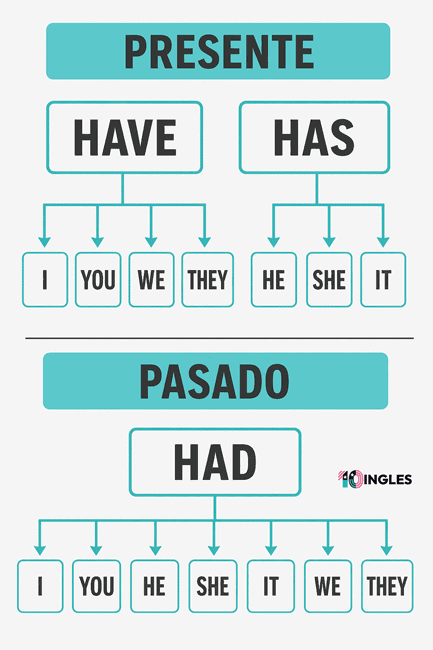
¿Cuál es la diferencia entre have, has y had en resumen? Have y has son las formas presentes del verbo: have se usa con I, you, we, they, y has con he, she, it. Had es la única forma del pasado y se usa con cualquier sujeto. Los tres también funcionan como auxiliares en los tiempos Perfect.
- Las tres formas del verbo have
- Cuándo usar have, has y had según el sujeto
- Matices avanzados: sujetos complejos y pronombres indefinidos
- Los usos de have, has y had como verbo léxico
- Have como verbo auxiliar: los tiempos Perfect
- Have como verbo modal: have to
- Have got y has got: variante informal
- Oraciones negativas con have, has y had
- Oraciones interrogativas con have, has y had
- Diferencias entre inglés americano y británico
- Tabla completa de conjugación del verbo have
- Expresiones fijas con have
- Errores comunes y cómo evitarlos
- Ejercicios de have, has y had para practicar
- Con esto ya dominas have, has y had
Las tres formas del verbo have
El verbo have se considera irregular (irregular verb), por lo tanto le corresponden las siguientes formas:
- have [hæv] / has [hæz] → had [hæd] → had [hæd]
Estas son las tres formas que necesitas dominar. La diferencia fundamental es simple:
- Have y has se usan en tiempo presente.
- Had se usa en tiempo pasado, y tiene la misma forma para todas las personas.
El verbo have en el habla se puede usar tanto como un verbo semántico ordinario (con significado propio) como un verbo auxiliar para formar ciertos tiempos del inglés: Present Perfect, Past Perfect, Present Perfect Continuous, Past Perfect Continuous.
Uso básico: quién lleva have, has y had
| Tiempo | Sujeto | Forma |
|---|---|---|
| Presente | I, you, we, they | have |
| Presente | he, she, it | has |
| Pasado | I, you, he, she, it, we, they | had |
Simple: tres formas, una regla central.
Cuándo usar have, has y had según el sujeto
Have (con I, you, we, they)
Esta conjugación se usa al hablar en primera persona (singular y plural), en segunda persona y en tercera persona del plural.
- I have a book. — Yo tengo un libro.
- We have aspirin! — ¡Tenemos aspirina!
- You have aspirin, too! — ¡Y tú tienes aspirina!
- They have two dogs. — Ellos tienen dos perros.
- We have a good relationship with our neighbors. — Tenemos una buena relación con nuestros vecinos.
Has (con he, she, it)
En realidad es lo mismo que have, solo que con otra terminación. Usas esta conjugación para hablar de alguien en tercera persona del singular (he, she, it).
- He has a plan — attack! — Él tiene un plan: ¡atacar!
- She has a new car. — Ella tiene un auto nuevo.
- He has a good job. — Él tiene un buen trabajo.
- The book has an interesting plot. — El libro tiene un argumento interesante.
- He has no rules, no boundaries, he doesn’t flinch at torture, human trafficking or genocide. — Él no tiene reglas, ni límites, no se inmuta ante la tortura, el tráfico de personas o el genocidio.
Had (pasado para todas las personas)
Todo es simple: have y has se usan solo en el tiempo presente, y para el pasado hay que tomar la conjugación had. La gran ventaja es que had no cambia con el sujeto: funciona igual con I, you, he, she, it, we y they.
- When I was a child, I had a hamster. — Cuando era niño, tenía un hámster.
- I had a delicious meal last night. — Anoche tuve una comida deliciosa.
- She had already seen that movie. — Ella ya había visto esa película.
- I had it all planned out! — ¡Lo tenía todo planeado!
Matices avanzados: sujetos complejos y pronombres indefinidos
Ya conoces la regla principal: has para la tercera persona del singular, have para todos los demás casos. Sin embargo, en la práctica surgen situaciones no estándar: aquí entran las reglas menos obvias del uso de have, has y had. Es importante entender que la elección entre have y has se determina no solo por los pronombres personales, sino también por los sustantivos en el rol de sujeto.
En mis años enseñando inglés he notado que incluso los estudiantes de nivel intermedio-avanzado tropiezan aquí.
Un estudiante mío preparaba una entrevista en una compañía internacional y durante el ensayo notaba que usaba constantemente frases como “My department have five people” o “The company have branches abroad”.
Después de repasar la regla e hicimos varios ejercicios, el truco mnemotécnico que le funcionó fue: “Si puedo reemplazar el sujeto por he, she o it, uso has”. En la entrevista no falló ni una vez, y eso causó muy buena impresión en el empleador.
1. Sujetos complejos
Cuando el sujeto consta de varias palabras o incluye construcciones determinativas, es importante identificar correctamente la palabra principal:
- The girl with the flowers has arrived. (La chica con las flores ha llegado.) → La palabra principal es girl, singular.
- My friend and his sister have moved to London. (Mi amigo y su hermana se han mudado a Londres.) → Dos sujetos unidos por la conjunción and.
2. Nombres propios
Los nombres propios (personas, compañías, países) siguen las mismas reglas:
- John has a new job. — John tiene un trabajo nuevo.
- Microsoft has released a new operating system. — Microsoft ha lanzado un nuevo sistema operativo.
- The United States has a diverse culture. — Los Estados Unidos tienen una cultura diversa.
3. Sustantivos colectivos
Hay que recordar los sustantivos colectivos que, a pesar de su significado plural, se consideran singular:
- The team has won the championship. — El equipo ha ganado el campeonato.
- The government has announced new policies. — El gobierno ha anunciado nuevas políticas.
4. Pronombres indefinidos
Con los pronombres indefinidos la situación es la siguiente:
| Forma | Pronombres | Ejemplos |
|---|---|---|
| have | both, few, many, several, all | Both of them have blue eyes.<br>Many people have tried and failed. |
| has | each, either, neither, one, everyone, everybody, anyone, anybody, someone, somebody, no one, nobody | Each student has a textbook.<br>Everyone has the right to education. |
Los usos de have, has y had como verbo léxico
To have es un verbo importante en el inglés. Más allá de ser verbo auxiliar y modal —que veremos después—, como verbo léxico cumple varias funciones principales.
1. Posesión, relaciones y características
El significado más común del verbo have/has es indicar que alguien posee o tiene algo. También describe relaciones, vínculos entre personas y cualidades (externas e internas) de personas o cosas:
- I have a cat. — Tengo un gato.
- She has a car. — Ella tiene un auto.
- I have two sisters. — Tengo dos hermanas.
- The company has three branches in Europe. — La compañía tiene tres sucursales en Europa.
- I have an appointment at 3 p.m. — Tengo una cita a las 3 p.m.
- She has many friends. — Ella tiene muchos amigos.
- He has blue eyes. — Él tiene ojos azules.
- She has a wonderful sense of humor. — Ella tiene un maravilloso sentido del humor.
- He has a quick temper. — Él tiene un carácter irascible.
- The house has three bedrooms. — La casa tiene tres recámaras.
- This flower has a wonderful smell. — Esta flor tiene un aroma maravilloso.
2. Acciones regulares y eventos
En algunas expresiones fijas, have/has designa acciones y eventos. En estos casos, el verbo to have a menudo no se traduce por separado: en la traducción al español se coloca en su lugar un verbo adecuado según el significado.
- I have breakfast at 7 a.m. every day. — Desayuno a las 7 a. m. todos los días.
- She has a shower twice a day. — Ella se ducha dos veces al día.
- They have dinner together on Sundays. — Ellos cenan juntos los domingos.
- Let’s have dinner. — Cenemos.
- We had a great party. — Tuvimos una excelente fiesta.
- Thank you for having us — we had a great time. — Gracias por invitarnos; la pasamos muy bien.
3. Sentimientos, pensamientos y resultados
Have también sirve para albergar sentimientos o pensamientos, y para expresar que se han traído u obtenido resultados:
- I have a cold. — Tengo un resfriado.
- They have doubts. — Ellos tienen dudas.
- She has good results in math. — Ella tiene buenos resultados en matemáticas.
- I have a feeling that today is going to be a good day. — Tengo el presentimiento de que hoy será un buen día.
4. Phrasal verbs y expresiones fijas
Have aparece también en phrasal verbs y estructuras fijas:
- She has given up on the project. — Ella ha renunciado al proyecto.
- We have fun together. — La pasamos bien juntos.
Más adelante vas a encontrar una tabla con las expresiones fijas más útiles.
Have como verbo auxiliar: los tiempos Perfect
Aquí entra el segundo gran rol del verbo have: el de verbo auxiliar para formar los tiempos perfectos. Estos tiempos se utilizan para designar acciones finalizadas o que continúan hasta el momento presente.
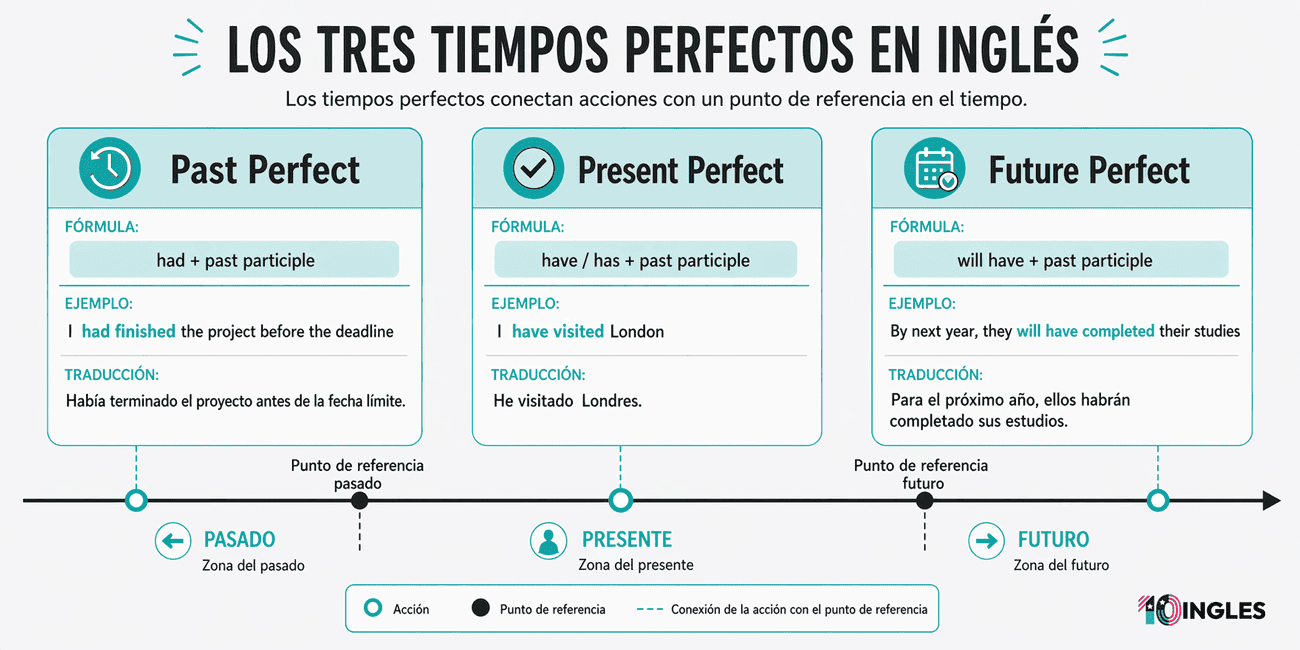
Los tiempos de aspecto perfecto utilizan la conjugación del verbo auxiliar have con el verbo semántico en pasado o en la tercera forma flexiva (participio). Un ejemplo ideal es el diálogo de Batman y el Acertijo en la película de 2022: el villano se indigna porque lo tenía todo planeado y dice “I had it all planned out!”.
Aquí usa Past Simple porque el plan ya desapareció (fracasó). Pero si dijera “I have had a plan since I was a child” (He tenido un plan desde que era niño), estaría usando Present Perfect, señal de que la acción ocurría continuamente en el pasado y continúa hasta ahora.
Present Perfect
Se usa para conectar acciones que ocurrieron en el pasado con el tiempo presente.
- I have visited London. — He visitado Londres.
- I have seen that movie. — Yo he visto esa película.
- I have worked here for five years. — He trabajado aquí por cinco años.
- She has visited Paris twice. — Ella ha visitado París dos veces.
Past Perfect
El Past Perfect expresa una acción que ocurrió antes de otra acción en el pasado.
- By the time I arrived, she had already left. — Para el momento en que llegué, ella ya se había ido.
- He had finished the project before the deadline. — Él había terminado el proyecto antes de la fecha límite.
- They had never seen such a beautiful sunset. — Ellos nunca habían visto un atardecer tan hermoso.
Future Perfect
Expresa acciones que estarán terminadas antes de un momento futuro.
- By next year, they will have completed their studies. — Para el próximo año, ellos habrán completado sus estudios.
- By next month, I will have completed this project. — Para el próximo mes, habré completado este proyecto.
- She will have graduated by the time we arrive. — Ella ya se habrá graduado para cuando lleguemos.
Tabla de fórmulas Perfect
| Perfect | Past | Present | Future |
|---|---|---|---|
| Fórmula | had + verb-ed / 3.ª forma del verbo irregular | have/has + verb-ed / 3.ª forma del verbo irregular | will + have + verb-ed / 3.ª forma del verbo irregular |
| Ejemplo | I had planned it all out! — ¡Lo había planeado todo! | I have planned it all for the past few years. — Durante los últimos años he estado planeando todo esto. | I will have planned it all out for 3 years next month. — El próximo mes se cumplirán ya tres años que estoy planeando todo esto. |
Have como verbo modal: have to
To have se utiliza como verbo modal con el significado de “deber”, “tener que”. En estos casos, la oración se construye según este modelo: sujeto + have/has + to + verbo.
- I have to go now. — Tengo que irme ahora.
- He has to make a decision. — Él tiene que tomar una decisión.
- I had to complete the project yesterday. — Ayer tuve que completar el proyecto.
- She has to finish this report today. — Ella debe terminar este informe hoy.
- I have to finish this report by tomorrow. — Debo terminar este informe para mañana.
- We have to be more careful in the future. — Debemos ser más cuidadosos en el futuro.
Si te interesa profundizar en los matices entre have to y su variante informal have got to, puedes consultar la comparación de have got to vs have to en Cambridge Grammar.
Have got y has got: variante informal
La estructura have got / has got se utiliza exactamente en las mismas situaciones que have/has en presente. En la escritura, en la estructura have/has got, el primer verbo generalmente se abrevia a ‘ve o ‘s y se une al pronombre o sustantivo mediante un apóstrofo. En el tiempo pasado, como verás más adelante, lo natural es usar simplemente had (no had got).
Simplemente la combinación have got se considera más informal y se usa más en el inglés conversacional. Si quieres profundizar en todos los matices de uso, puedes consultar la guía oficial de Cambridge sobre have got. Por analogía con have, para todas las personas —excepto la tercera del singular— se usa exclusivamente have got. Los pronombres he, she, it requieren después de sí has got y punto.
¡Importante! Solo el verbo have se conjuga en tales combinaciones por género y número, pero no por tiempo. Y got permanece sin cambios.
Have got / has got en tiempo presente
| AFIRMACIÓN | NEGACIÓN | PREGUNTA |
|---|---|---|
| I have got a lil’ sis. | I haven’t got a lil’ sis. | Have I got a lil’ sis? |
| YOU have got a lil’ sis. | YOU haven’t got a lil’ sis. | Have YOU got a lil’ sis? |
| IT has got a lil’ sis. HE has got a lil’ sis. SHE has got a lil’ sis. | IT hasn’t got a lil’ sis. HE hasn’t got a lil’ sis. SHE hasn’t got a lil’ sis. | Has IT got a lil’ sis? Has HE got a lil’ sis? Has SHE got a lil’ sis? |
| WE have got a lil’ sis. | WE haven’t got a lil’ sis. | Have WE got a lil’ sis? |
| YOU have got a lil’ sis. | YOU haven’t got a lil’ sis. | Have YOU got a lil’ sis? |
| THEY have got a lil’ sis. | THEY haven’t got a lil’ sis. | Have THEY got a lil’ sis? |
Had got en tiempo pasado
En el tiempo pasado, en la práctica real se usa simplemente had (no had got en la mayoría de casos, ya que esa forma es poco natural en el inglés moderno):
- I / You / It / He / She / We / They had a lovely party yesterday.
- I / You / It / He / She / We / They didn’t have a lovely party yesterday.
- Did + I / You / It / He / She / We / They have a lovely party yesterday?
Comparación formal vs informal
| HAVE / HAS / HAD (variante formal) | HAVE GOT / HAS GOT (variante informal) |
|---|---|
| HAVE (Present Simple) → I, YOU, WE, THEY | HAVE GOT (Present Simple) → I, YOU, WE, THEY |
| HAS (Present Simple) → HE, SHE, IT | HAS GOT (Present Simple) → HE, SHE, IT |
| HAD (Past Simple) → I, YOU, HE, SHE, IT, WE, THEY | En pasado no se usa had got en la práctica: se emplea simplemente had |
Ejemplos de uso de have got
- I have got a new book. — Tengo un libro nuevo.
- They have a dog. / They have got a dog. — Ellos tienen un perro.
- She has got two brothers. — Ella tiene dos hermanos.
- I have got a new phone. — Tengo un celular nuevo.
- She has got three children. — Ella tiene tres hijos.
Oraciones negativas con have, has y had
La estructura de la oración depende del significado con el que hayas decidido usar el verbo have. En el caso de have como unidad independiente, todo es simple: tomas el sujeto y la palabra de negación do not o did not y añades have. Si necesitas añadir una negación a have en el papel de verbo auxiliar —por regla general, en los Perfect Tenses— la partícula not se añadirá al propio have.
a) Forma formal con do/does/did + not + have
- I do not have a car. / I don’t have a car. — No tengo un auto.
- She does not have time for this. / She doesn’t have time for this. — Ella no tiene tiempo para esto.
- They do not have any children. / They don’t have any children. — Ellos no tienen hijos.
b) Negación de have got (más británica)
- She has not got any money. — Ella no tiene dinero.
- I haven’t got a car. — No tengo un auto.
Ejemplos con tabla completa (Present Simple)
| AFIRMACIÓN | NEGACIÓN | PREGUNTA |
|---|---|---|
| I have breakfast at about nine frequently. | I don’t have breakfast at about nine frequently. | Do I have breakfast at about nine frequently? |
| YOU have breakfast at about nine frequently. | YOU don’t have breakfast at about nine frequently. | Do YOU have breakfast at about nine frequently? |
| IT has breakfast at about nine frequently. HE has breakfast at about nine frequently. SHE has breakfast at about nine frequently. | IT doesn’t have breakfast at about nine frequently. HE doesn’t have breakfast at about nine frequently. SHE doesn’t have breakfast at about nine frequently. | Does IT have breakfast at about nine frequently? Does HE have breakfast at about nine frequently? Does SHE have breakfast at about nine frequently? |
| WE have breakfast at about nine frequently. | WE don’t have breakfast at about nine frequently. | Do WE have breakfast at about nine frequently? |
| YOU have breakfast at about nine frequently. | YOU don’t have breakfast at about nine frequently. | Do YOU have breakfast at about nine frequently? |
| THEY have breakfast at about nine frequently. | THEY don’t have breakfast at about nine frequently. | Do THEY have breakfast at about nine frequently? |
Oraciones interrogativas con have, has y had
La diferencia de nuevo está en el significado del verbo: la construcción cambia ligeramente según qué have exactamente necesitemos.
1. Preguntas con have como verbo principal (posesión)
Para hacer una pregunta sobre si el interlocutor tiene algo, sigues este esquema: Do/Does/Did + sujeto + have.
- Do you have a pet? — ¿Tienes una mascota?
- Do you have a brother? — ¿Tienes un hermano?
- Does she have enough experience? — ¿Ella tiene suficiente experiencia?
- Do they have any pets? — ¿Ellos tienen mascotas?
- Do they have any questions? — ¿Tienen ellos alguna pregunta?
- Do you have any aspirin? — ¿Tienes aspirina?
2. Preguntas con have got
- Has she got any children? — ¿Ella tiene hijos?
- Have you got a new phone? — ¿Tienes un celular nuevo?
3. Preguntas con have como verbo auxiliar (Perfect Tenses)
Aquí todo es un poco más complicado, pero no demasiado: hay que usar la inversión. Para hacer la pregunta, pones en primer lugar el verbo auxiliar have, en segundo el sujeto y en tercero el verbo semántico.
Esquema: Have/has/had + sujeto + verbo semántico
- Have you finished your homework? — ¿Has terminado tu tarea?
- Has she ever been to Paris? — ¿Ella ha estado alguna vez en París?
4. Preguntas especiales (Wh-)
Al construir preguntas que comienzan con las palabras interrogativas what, who, where, when, why, how se utilizan los mismos principios:
- What kind of car do you have? — ¿Qué tipo de auto tienes?
- How many sisters does he have? — ¿Cuántas hermanas tiene él?
- What has she done with my book? — ¿Qué ha hecho ella con mi libro?
Tabla completa de interrogativas y negativas en Past Simple
| AFIRMACIÓN | NEGACIÓN | PREGUNTA |
|---|---|---|
| I had a gorgeous dream last Monday. | I didn’t have a gorgeous dream last Monday. | Did I have a gorgeous dream last Monday? |
| YOU had a gorgeous dream last Monday. | YOU didn’t have a gorgeous dream last Monday. | Did YOU have a gorgeous dream last Monday? |
| IT had a gorgeous dream last Monday. HE had a gorgeous dream last Monday. SHE had a gorgeous dream last Monday. | IT didn’t have a gorgeous dream last Monday. HE didn’t have a gorgeous dream last Monday. SHE didn’t have a gorgeous dream last Monday. | Did IT have a gorgeous dream last Monday? Did HE have a gorgeous dream last Monday? Did SHE have a gorgeous dream last Monday? |
| WE had a gorgeous dream last Monday. | WE didn’t have a gorgeous dream last Monday. | Did WE have a gorgeous dream last Monday? |
| YOU had a gorgeous dream last Monday. | YOU didn’t have a gorgeous dream last Monday. | Did YOU have a gorgeous dream last Monday? |
| THEY had a gorgeous dream last Monday. | THEY didn’t have a gorgeous dream last Monday. | Did THEY have a gorgeous dream last Monday? |
Diferencias entre inglés americano y británico
En el inglés americano se usa con más frecuencia el verbo have sin got, mientras que en el inglés británico a menudo se usa have got:
- I have a friend. (inglés americano) / I have got a friend. (inglés británico) — Tengo un amigo.
En el inglés estadounidense se utiliza más a menudo simplemente have con el verbo auxiliar do/does para preguntas y negaciones. Si quieres profundizar en las diferencias dialectales más allá de have, puedes consultar la guía completa de diferencias entre británico y americano.
Tabla completa de conjugación del verbo have
Esta tabla resume todos los tiempos principales del verbo have y te sirve como referencia rápida:
| Tiempo | Forma afirmativa | Forma negativa | Forma interrogativa |
|---|---|---|---|
| Presente | I/you/we/they have<br>He/she/it has | I/you/we/they do not have<br>He/she/it does not have | Do I/you/we/they have?<br>Does he/she/it have? |
| Pasado | I/you/he/she/it/we/they had | I/you/he/she/it/we/they did not have | Did I/you/he/she/it/we/they have? |
| Futuro | I/you/he/she/it/we/they will have | I/you/he/she/it/we/they will not have | Will I/you/he/she/it/we/they have? |
| Pasado perfecto | I/you/he/she/it/we/they had had | I/you/he/she/it/we/they had not had | Had I/you/he/she/it/we/they had? |
| Presente perfecto | I/you/he/she/it/we/they have had | I/you/he/she/it/we/they have not had | Have I/you/he/she/it/we/they had? |
| Futuro perfecto | I/you/he/she/it/we/they will have had | I/you/he/she/it/we/they will not have had | Will I/you/he/she/it/we/they have had? |
Expresiones fijas con have
Aquí tienes una selección de las expresiones fijas más comunes con have. Dominarlas va a subir tu inglés a otro nivel.
| Expresión fija | Ejemplo |
|---|---|
| to have a baby — tener un bebé | They’re planning to have a baby next year. — El próximo año ellos planean tener un bebé. |
| to have a break — tomar un descanso | Let’s have a break after an hour of work. — Trabajemos una horita y luego tomemos un descanso. |
| to have a chance — tener una oportunidad | Do you think I’ll have a chance to speak during the meeting? — ¿Crees que tendré la oportunidad de hablar durante la reunión? |
| to have a drink — beber algo | Would you like to have a drink after work? — ¿No quieres ir a beber algo después del trabajo? |
| to have a look — mirar | Can you have a look at this report and give me your feedback? — ¿Puedes darle una mirada a este reporte y comentarlo? |
| to have a meal — comer | We should have a meal together sometime. — Deberíamos comer juntos alguna vez. |
| to have a problem — tener un problema | If you have a problem, feel free to ask for help. — Si tienes un problema, no dudes en pedir ayuda. |
| to have a rest — descansar | You look tired; you should have a rest. — Te ves cansado, es hora de que descanses. |
| to have a shower — tomar una ducha | I’m going to have a shower before we go out. — Antes de salir, voy a tomar una ducha. |
| to have a talk — hablar, discutir | Let’s have a talk about your performance. — Hablemos sobre tu desempeño. |
| to have an argument — discutir, pelear | They had an argument, but they’ve made up now. — Ellos discutieron, pero ahora se han reconciliado. |
| to have an idea — tener una idea | I just had an idea for our new marketing campaign. — Se me acaba de ocurrir una idea para nuestra nueva campaña de marketing. |
| to have fun — divertirse | Make sure to have fun at the party! — ¡Asegúrate de divertirte en la fiesta! |
| to have breakfast / lunch / dinner — desayunar, almorzar, cenar | We had dinner at a lovely restaurant last night. — Anoche cenamos en un restaurante encantador. |
| to have time — tener tiempo | Do you have time to discuss it now? — ¿Tienes tiempo para discutirlo ahora? |
| to have a feeling — tener una sensación | I have a feeling that today is going to be a good day. — Tengo el presentimiento de que hoy será un buen día. |
| to have a dream — tener un sueño | Last night, I had a strange dream about flying. — Anoche tuve un sueño extraño sobre volar. |
| to have a plan — tener un plan | Do we have a plan for the weekend? — ¿Tenemos un plan para el fin de semana? |
| to have an appointment — tener una cita | She has an appointment with her dentist tomorrow. — Mañana ella tiene una cita con su dentista. |
| to have patience — tener paciencia | You’ll need to have patience; these things take time. — Necesitarás tener paciencia; estas cosas toman tiempo. |
| to have words with someone — hablar seriamente | I’m going to have words with my neighbor if he doesn’t stop playing loud music late at night. — Voy a hablar seriamente con mi vecino si no deja de poner música a todo volumen tarde en la noche. |
Otras expresiones idiomáticas con have
En el inglés existen también muchas expresiones idiomáticas con el verbo have que vale la pena conocer:
- have a good time — pasar un buen rato
- have a word with someone — hablar con alguien
- have something in mind — tener algo en mente
- have an eye for — tener ojo para algo
- have a say in — tener voz en algo
- have one’s heart set on — desear mucho algo
Errores comunes y cómo evitarlos
Con el tiempo desarrollé ejercicios específicos para esto después de notar un error típico: muchos estudiantes usan have y has correctamente en situaciones básicas, pero se pierden con las expresiones idiomáticas.
Un estudiante que atendía clientes estadounidenses por teléfono decía cosas como “I has no idea” o “She have a point”, lo cual sonaba poco profesional. Le armé una lista de 20 expresiones comunes con have/has en comunicación de negocios y las practicamos hasta automatizarlas. Al mes, sus colegas notaron la mejora.

Estos son los errores más comunes al construir preguntas y negaciones con have/has:
- ❌ She has not a car. (Incorrecto en el inglés moderno)
✅ She does not have a car. / She hasn’t got a car. (Correcto) - ❌ Has he a new job? (Forma obsoleta)
✅ Does he have a new job? / Has he got a new job? (Formas modernas)
Otros errores frecuentes que he visto en el aula:
- Confundir sujeto colectivo con plural: “The team have won” en inglés americano estándar se escribe “The team has won” (aunque en británico se acepta ambas).
- Usar “I has” o “She have”: cambio de persona y número, error claro.
- Olvidarse de conjugar have en have got: “She have got a book” debe ser “She has got a book”.
Un caso clásico que confunde a muchos hispanohablantes es si se dice she has had o she have had: la respuesta es siempre she has had, porque has es la forma para tercera persona del singular y had es el participio del verbo have.
Ejercicios de have, has y had para practicar
Ahora te toca a ti. Tres ejercicios para consolidar todo lo que viste. Intenta resolverlos sin mirar hacia arriba y verifica tus respuestas en la sección final del artículo. Ten en cuenta que en cada oración solo es posible una opción correcta.
Ejercicio 1: elige la forma correcta del verbo to have
Completa con have, has o had:
- She _____ a wonderful sense of humor.
- By the time we arrived, the meeting _____ already started.
- I wish I _____ more time to spend on vacation.
- They _____ no idea we were coming.
- He _____ to finish his assignment by tomorrow.
- We _____ been waiting for you since morning.
- You _____ all the necessary qualifications for this job.
- It _____ been raining all day.
- They _____ two cats and a dog when they were kids.
Respuestas Correctas
2. had — By the time we arrived, the meeting had already started.
3. had — I wish I had more time to spend on vacation.
4. had — They had no idea we were coming.
5. has — He has to finish his assignment by tomorrow.
6. have — We have been waiting for you since morning.
7. have — You have all the necessary qualifications for this job.
8. has — It has been raining all day.
9. had — They had two cats and a dog when they were kids.
Ejercicio 2: selecciona la opción correcta
Elige la forma apropiada entre las alternativas:
- Every student in the class (have / has) to read that book by next week.
- She (has / had) always had a keen interest in science.
- If only I (had / had had) more courage back then!
- They (have / had) a long journey ahead of them. They just set out this morning.
- The museum (have / had) a lot of visitors last year.
- I (have / have had) my lunch, so I’m not hungry.
- You (have / has) to see this movie; it’s incredible!
- We (have / had) been thinking about moving to a new city.
- He (have / has) a lot of work to do before the day ends.
- She (has / had) just had an idea for a new project.
Respuestas Correctas
2. has always had — She has always had a keen interest in science.
3. had had — If only I had had more courage back then!
4. have — They have a long journey ahead of them. They just set out this morning.
5. had — The museum had a lot of visitors last year.
6. have had — I have had my lunch, so I’m not hungry.
7. have — You have to see this movie; it’s incredible!
8. have — We have been thinking about moving to a new city.
9. has — He has a lot of work to do before the day ends.
10. has just had — She has just had an idea for a new project.
Ejercicio 3: completa con la expresión adecuada
Completa cada oración eligiendo del banco de palabras. Cada opción se usa solo una vez.
Banco de palabras: a look / a problem / a dream / an excuse / words / a drink / a baby / respect / a talk / patience / a goal / a chance / an appointment / a meal / a break
- I really need to have _____; I’ve been working for 10 hours straight.
- She will have _____ in the spring. She has already started setting up the nursery.
- After the meeting, let’s all go and have _____ to celebrate.
- Can you have _____ at this email before I send it out?
- They’ve decided to have _____ at a fancy restaurant for their anniversary.
- If you have _____ with the software, please let the IT department know.
- We should have _____ about the budget for next quarter.
- He always seems to have _____ for not completing his work on time.
- She didn’t just have _____; she had a vision for the entire company’s future.
- Despite the disagreement, it’s important to have _____ for each other’s opinions.
- Tomorrow, I have _____ with the doctor for a routine check-up.
- They have _____ to reduce their carbon footprint by 50% in the next five years.
- I can’t believe you have _____ to meet the author in person!
- It’s crucial that we have _____ with the new hires as they learn the ropes.
- I’m going to have _____ with James if he doesn’t give me my money back.
Respuestas Correctas
2. a baby
3. a drink
4. a look
5. a meal
6. a problem
7. a talk
8. an excuse
9. a dream
10. respect
11. an appointment
12. a goal
13. a chance
14. patience
15. words
Con esto ya dominas have, has y had
Ya conoces la diferencia entre have, has y had al completo: cuándo poner cada forma según el sujeto, cómo funcionan como verbos independientes, como auxiliares en los Perfect Tenses, como modales en have to, y en la variante informal have got. Con práctica regular y atención a los matices que viste, la elección entre estas tres formas pronto será automática.
Aim for the best version of yourself!
Comentarios